NEWS & INSIGHTS

The Turnaround Podcast: Ian Carson AM — Responsible investing and modern governance principles

The Turnaround Podcast | Episode 10

Some investor groups are, increasingly, no longer content with just a financial return. Often, they are seeking outlets where their capital can also achieve social good, or investments that are congruent with their values.  The concepts of sustainability, environmental, social, and governance are terms as visible to the modern investor as return on investment and dividend yield. 

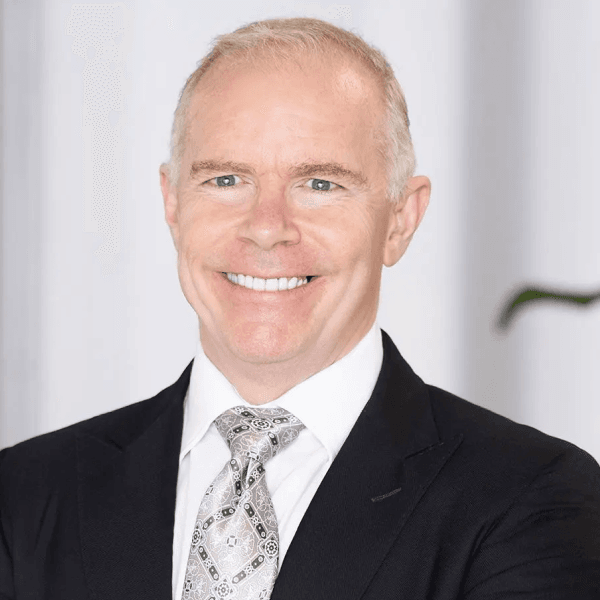
We recently sat down with business leader and social impact champion/entrepreneur Ian Carson to discuss how investors, and to some degree potential employees, review responsible practices as a way to assess the long-term risk, viability and ethical impact of an organisation.

Ian Carson - Responsible investing and modern governance principles

Watch Joe and Ian's discussion by clicking on the video below. Alternatively, click here to listen on Spotify.


ABOUT IAN CARSON

Restructuring Practitioner, founded Carson McLellan, which merged with PPB Advisory and later with PwC, where he was Chairman of Markets;

  • Currently Executive Chair at Tanarra Restructuring Partners;
  • Founder with his wife Simone of NFP organisation, SecondBite, Australia’s largest free food rescue organisation, partnering with community organisations to have provided the equivalent of over 350 million meals;
  • President of the Arts Centre Melbourne Trust where it has an ambitious program to transform the Melbourne arts precinct.  

It is a distinguished career, with a notable focus on giving back to community that has seen Ian and Simone named Melbournians of the year, an award of the Order of Australia, and recognition as social entrepreneur of the year.

ABOUT TANARRA CAPITAL 

  • Leaders in the field of alternative investment providing growth, private equity, credit and restructuring capital via various funds, with over $3Bn in assets under management.  
  • Have a clear and published Responsible Investing Policy that recognises their duty to behave responsibly in making sound investment decisions, cognisant of a responsible investment approach to Environmental, Social & Governance (ESG) principles.
  • Have published Short Form, Modernised Set of Corporate Governance Principles for Australian Public Companies leaving greater room for companies to apply common sense and business judgement 
     

TANARRA’S SHORT FORM MODERNISED SET OF GOVERNANCE PRINCIPLES

Click here for a link to Tanarra's PDF


PRINCIPLESDETAIL
Six Key Objectives 
  • Simplify and make the principles less prescriptive and paternalistic - greater room for companies to apply common sense and business judgement
  • Reweight the principles back to established rules of corporate law
  • Align the principles better with the national interest of growing the Australian economy, more focus on performance, less on compliance and box-ticking
  • Increase corporate accountability and shareholder democracy
  • Recognise the reality NED independence has significant practical limitations in the small Australian business and company director community
  • Adapt to the structural change in financial markets whereby public equity markets are now more than ever competing for relevance and capital with private markets
Overarching Principles
  • As company law prescribes, the role of a company board is to act in the best interests of the company and, by extension, its shareholders
  • The company is owned by its shareholders, who have the ability alone to elect its principal means of stewardship, its board of directors
  • A company must be a valued, respected and trustworthy partner for its customers, employees, suppliers and communities on a sustainable basis
  • The board has however no formal legal responsibility to a broader set of “stakeholders”, a concept which lacks clarity of meaning and responsibilities
  • It should be left to individual boards (with ultimate accountability to their shareholders) to determine the approach that is in the best interests of their company, rather than prescriptive rules or guidelines which compel public explanation for non-compliance
  • Directors should exercise diligence and business judgement in supervising the affairs of a company, but should allow management to run the business day to day. 
     
Board composition
  • The appropriateness of board composition should be a matter for the shareholders of a company, not for prescription
  • It is desirable that boards include executives who have had CEO or other senior leadership experience at other companies with relevance in terms of industry, size, scope, complexity or a public/consumer facing element
  • It is desirable that boards include a strong component of members who are financially literate, who are able to read, understand and interrogate financial statements, management accounts and investment analysis competently
  • It is desirable that boards are diverse in their thought processes, life experiences, personal qualities and skills. 
    It is in the self-interest of companies to have boards that understand and relate to their company’s customers, employees and communities, and make the company an attractive organisation to work at, or with which to do business
  • It is desirable that boards include directors who are independent in a genuine and practical sense, not simply in terms of check list compliance
  • Except in unusual circumstances or in periods of board transition, a board should be no more than nine members
  • A board should have a skills matrix as a tool in assessing board composition and appointments, but an overall assessment of what is needed for the company should drive appointments, not a formulaic skill assessment
     
Board Culture and Process
  • A board should determine the right number of meetings per year that allows it to meet its legal and strategic responsibilities, without devolving to being a managerial board or causing management to spend a disproportionate amount of time managing the board
  • As a general guide, six to eight board meetings a year should be sufficient
  • A board should undertake an annual performance evaluation including the Chair’s performance and the effectiveness of the relationship between the Chair and the CEO
  • The board should meet routinely in the absence of management to discuss whatever it wishes
  • Boards and management should ensure their companies have a strong culture of ethical performance and accountability
  • The structure and size of organisational support functions such as HR and sustainability departments should reinforce, not blur, a clear culture of performance and accountability
  • NEDs should make time regularly to “walk the floor” of company operations and interact informally with staff and customers, without CEO supervision
  • Without overburdening management, NEDs should have direct access to the CFO or other senior management outside scheduled board meetings and without the CEO needing to be present, to discuss any matter of interest to
  • Board packs should include a short executive summary of matters considered by management to fall into each of the following categories: important/high risk; for decision; emerging issues; and for noting

Contact


Chris Sequeira - square.png

MELBOURNE
Chris Sequeira
Partner

Joe Hayes

SYDNEY
Joe Hayes
Partner

Published 8th April 2026

expert image

By Wexted

SPOTLIGHT ON LAW: CONFLICT RULES IN GROUP APPOINTMENTS

SPOTLIGHT ON LAW: David vs Goliath — Court considers Government approach to defending insolvency litigation

JOIN THE TURNAROUND

WEXTED'S NEWS PUBLICATION