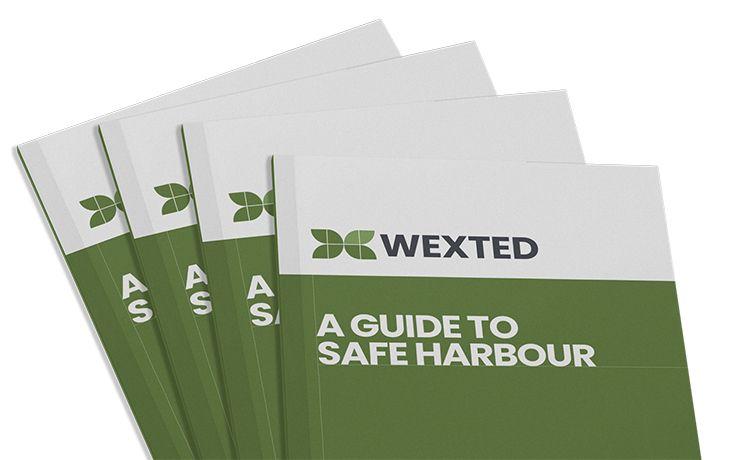
SAFE HARBOUR GUIDE
Download the Safe Harbour Guide from Wexted. It delivers a comprehensive overview of Safe Harbour; including what it is, when it applies, and how it can protect directors during periods of financial uncertainty.
DOWNLOAD
Wexted's Safe Harbour Resource Centre brings together government papers, regulatory guidance, industry codes, academic commentary and thought-leading analysis into one structured, searchable location. Whether you are a director, accountant, lawyer, broker, lender or restructuring adviser, the library is intended to assist with governance, compliance and turnaround planning. We also welcome submissions from organisations and practitioners contributing credible, thought-leading work in the Safe Harbour and restructuring field.
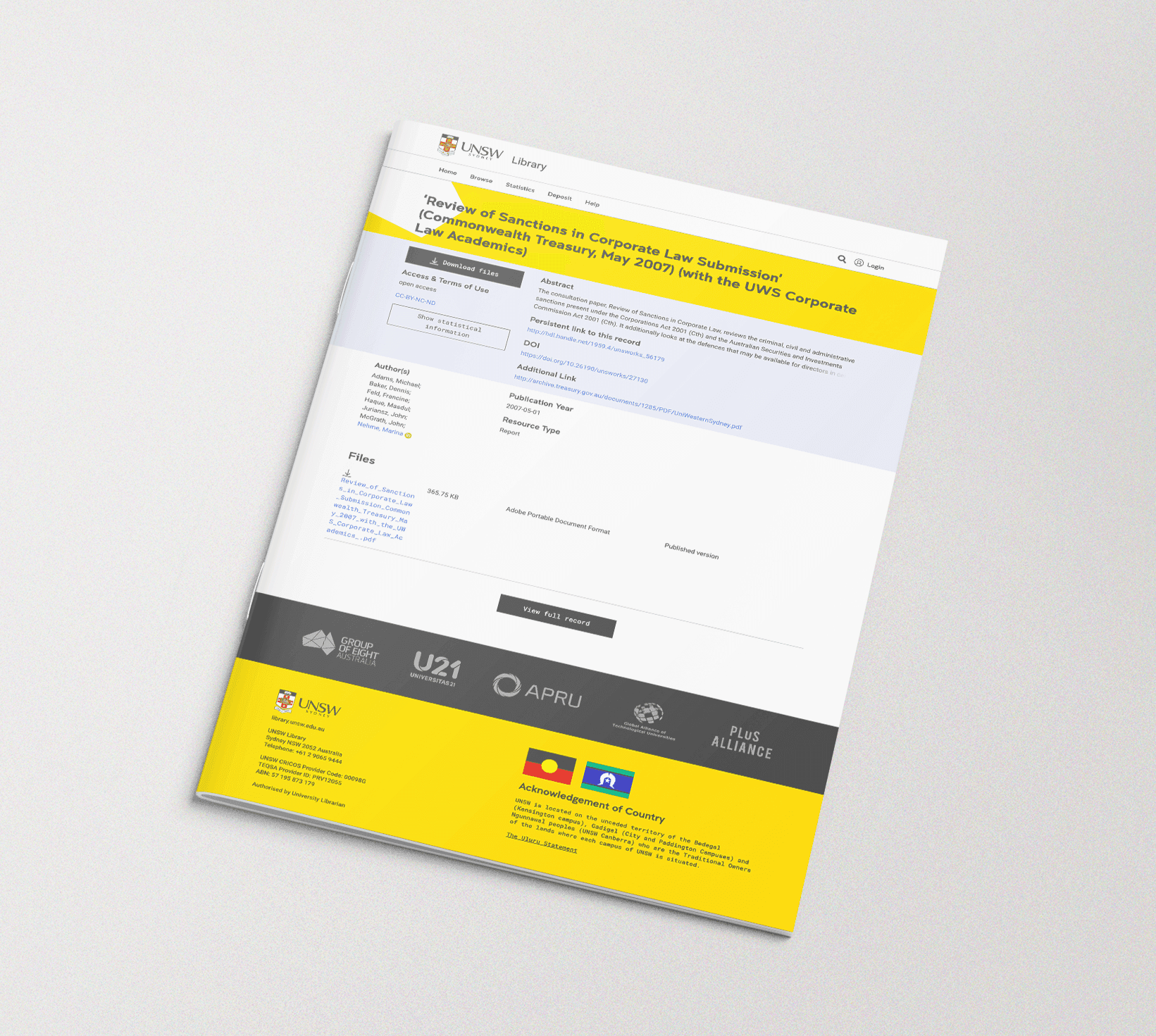
A Treasury discussion paper examining civil and criminal sanctions in the Corporations Act, probing whether existing penalties hinder directors’ responsible risk-taking and exploring options for reform — including broader defences or modified sanctions to better balance enforcement with business rescue.
Read now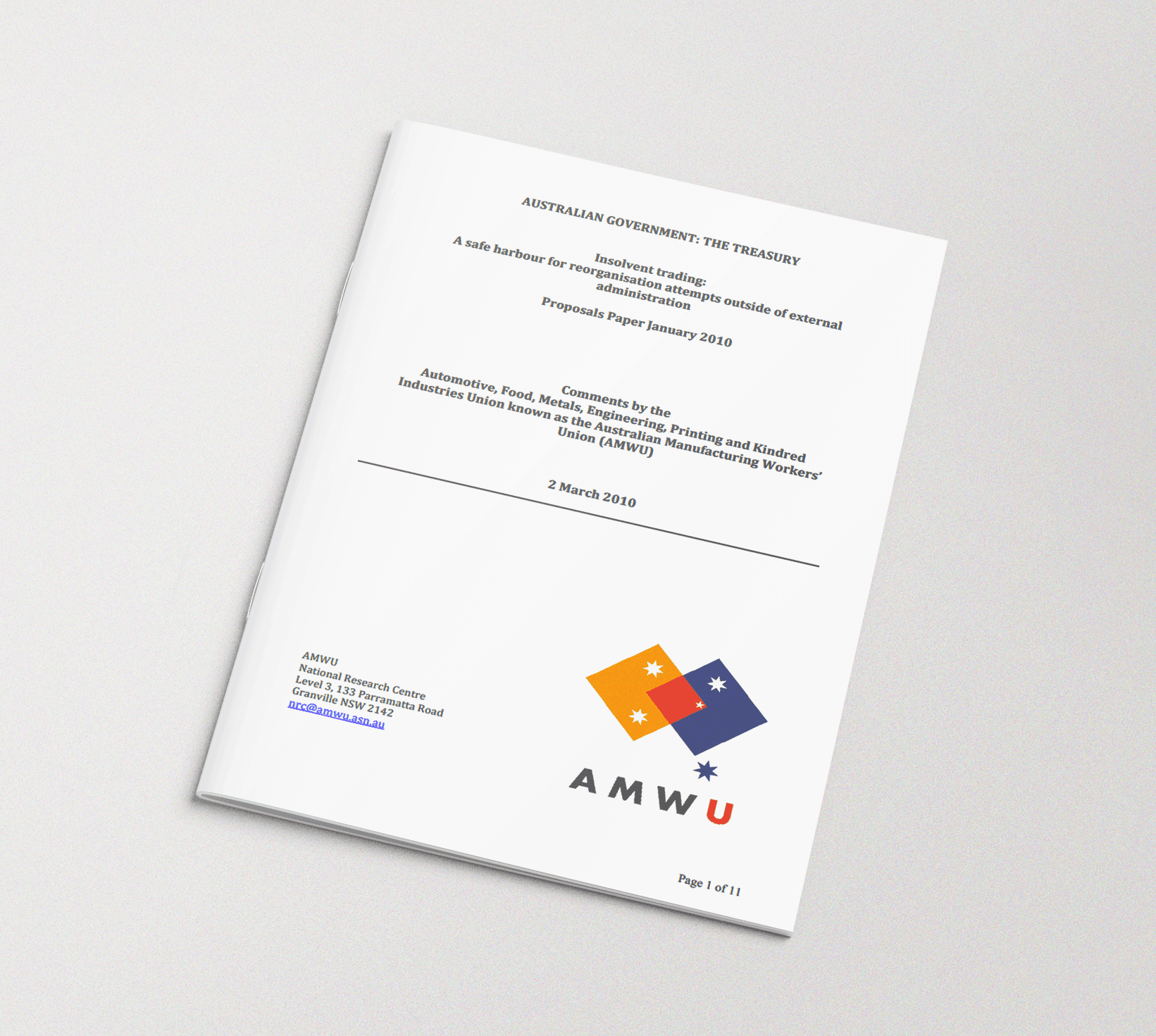
A government proposals paper canvassing reforms to insolvent-trading laws, including options such as the status quo, a modified business-judgement rule, or a limited moratorium. It sought stakeholder input on mechanisms to enable reorganisation attempts outside external administration.
Read now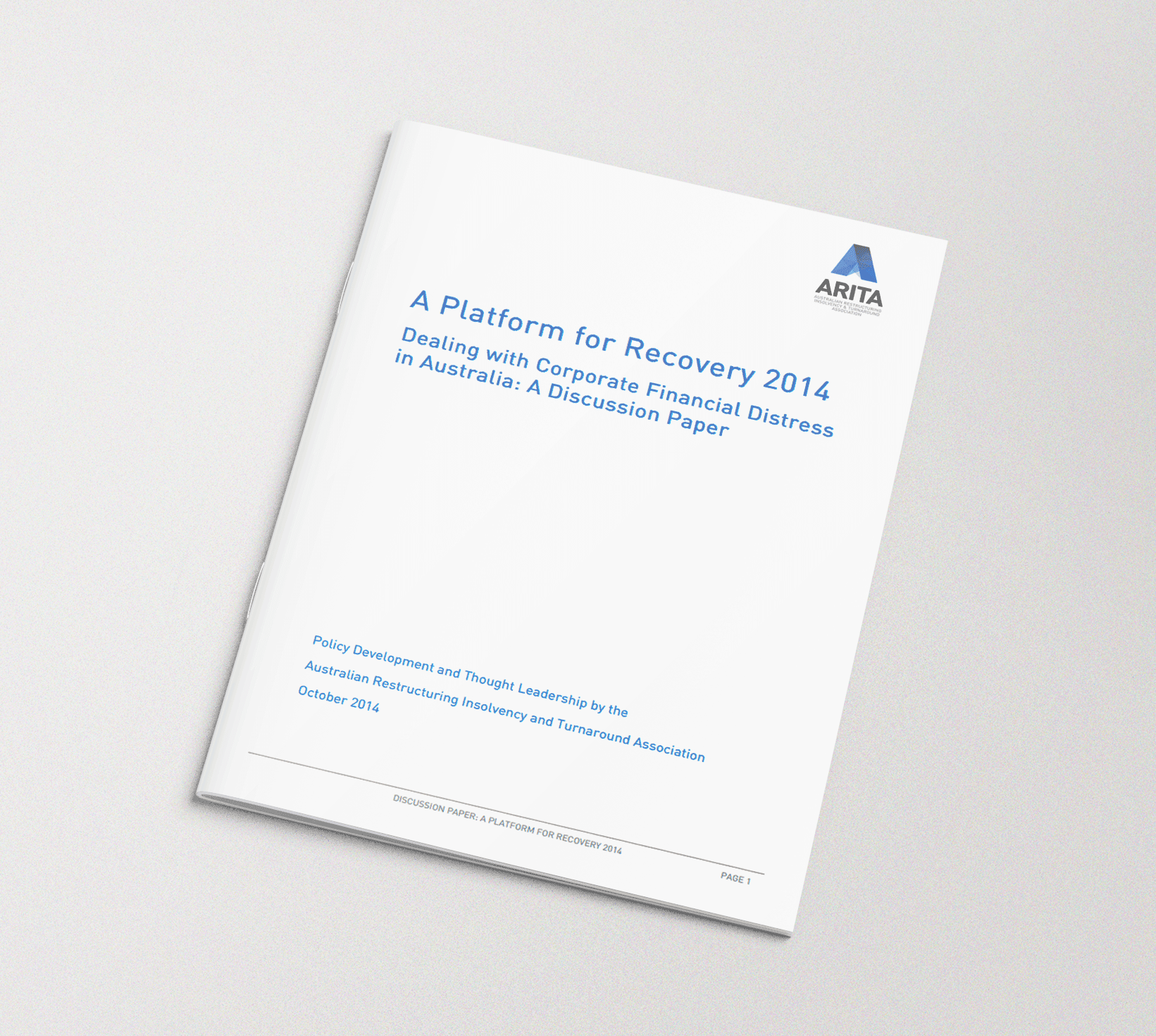
ARITA’s discussion paper sets out a constructive framework for business recovery, arguing for reforms and practical tools to improve turnaround outcomes, enhance creditor engagement and support rescue-focused approaches within Australia’s insolvency landscape
Read now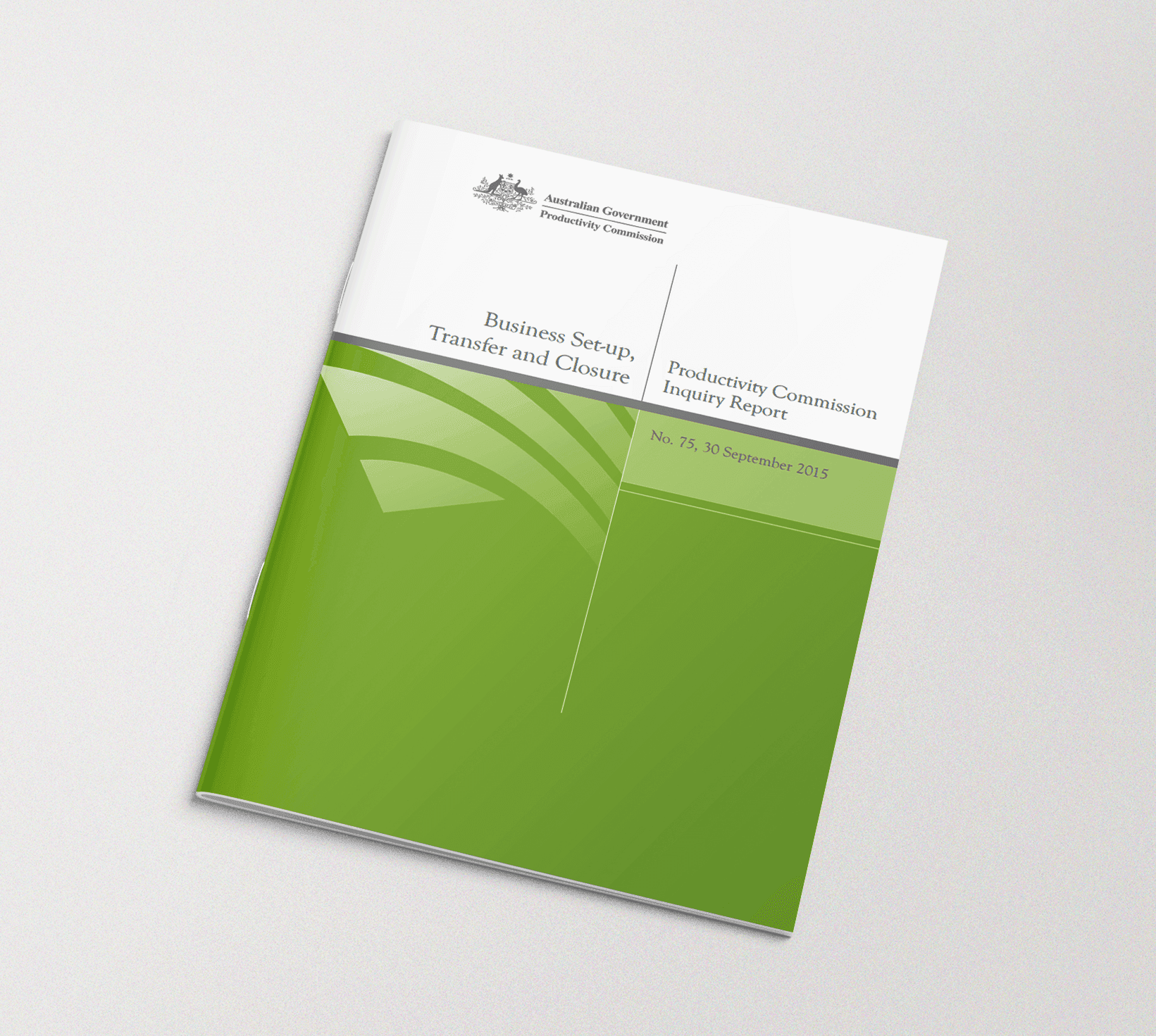
The Commission’s inquiry examines barriers to business entry, transfer and closure, analysing insolvency practices and recommending reforms to reduce exit costs, improve market dynamism and better balance creditor, employee and owner interests across business lifecycle events.
Read now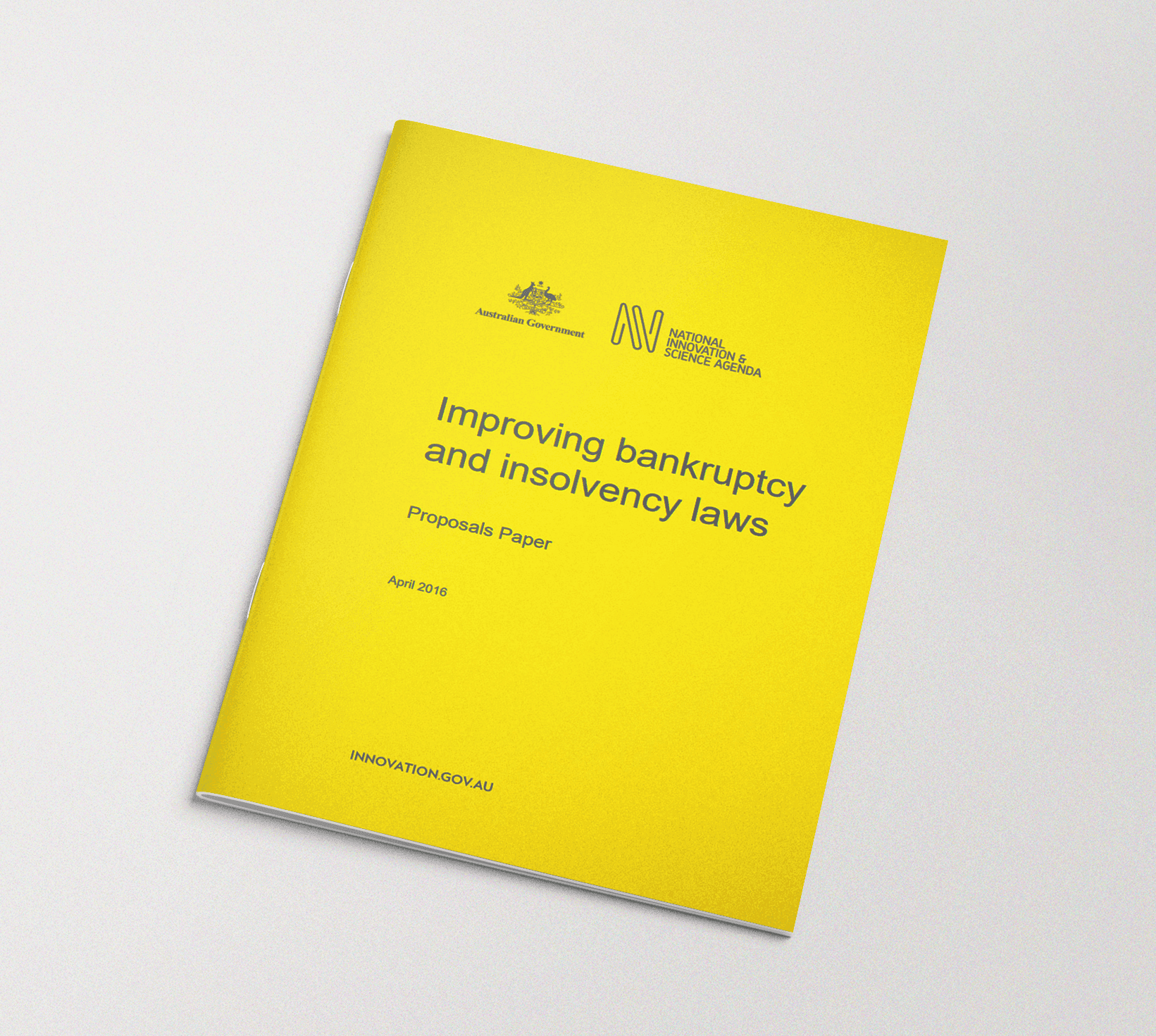
As part of the National Innovation & Science Agenda, Treasury’s proposals paper outlines reform options to modernise bankruptcy and corporate insolvency laws — aiming to streamline processes, assist small businesses, and strengthen rescue mechanisms while protecting creditors and the public interest.
Read now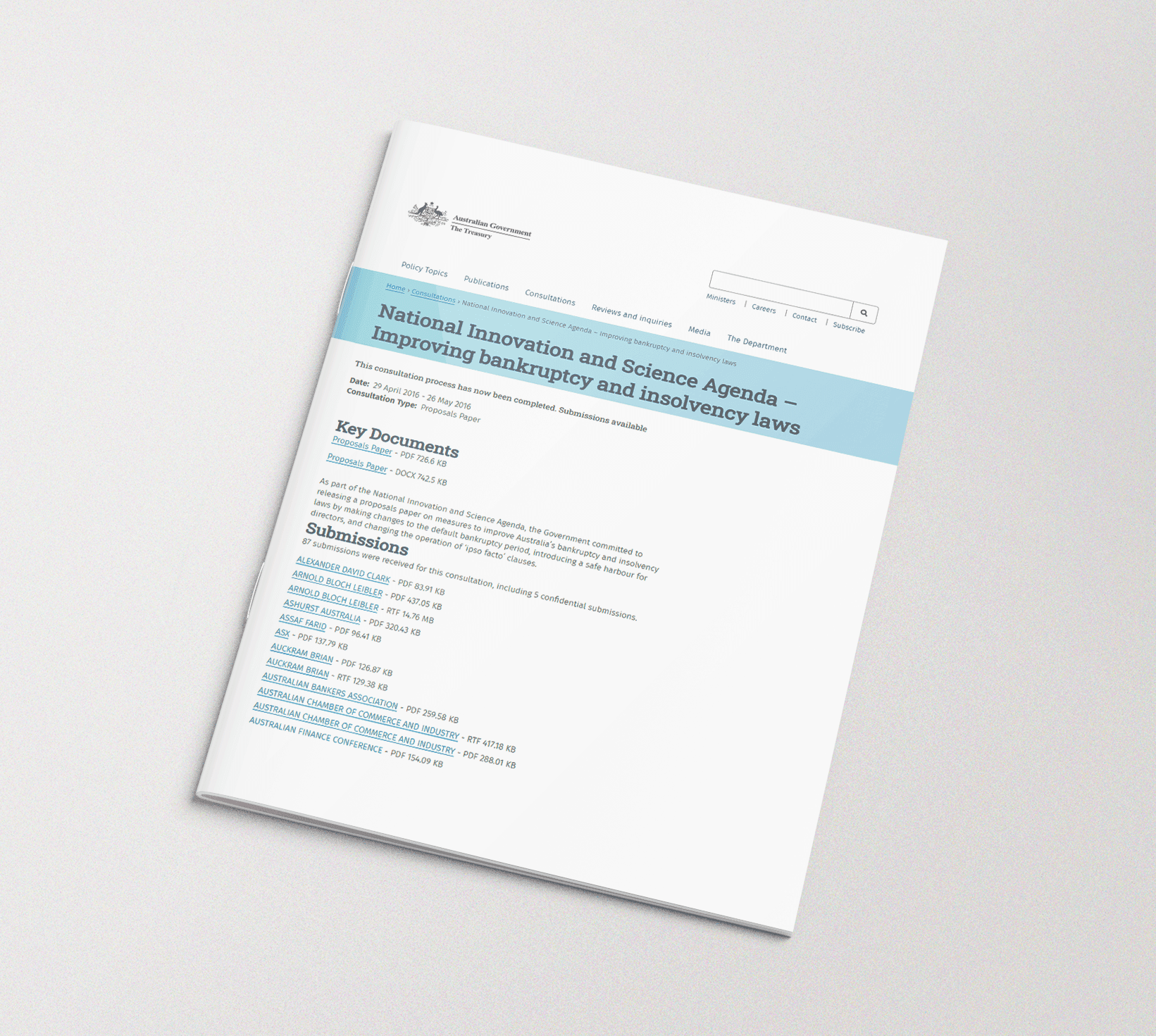
This Treasury consultation portal summarises proposals under the NISA reforms, provides background material and invites submissions on measures to enhance insolvency frameworks — signalling government intent to consider targeted legislative and procedural change.
Read now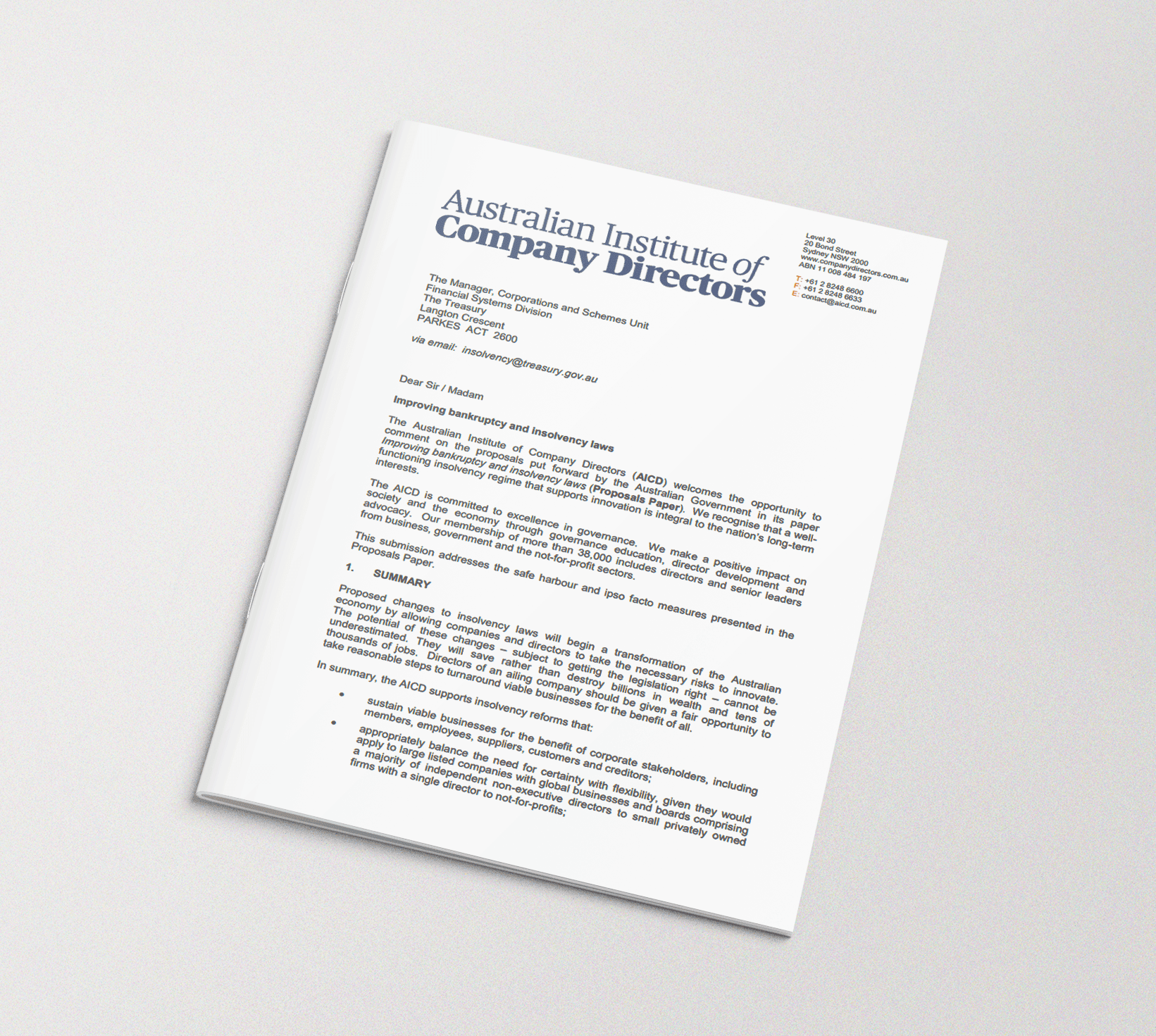
The AICD’s submission to Treasury supports the introduction of a Safe Harbour regime to rebalance directors’ risk-taking. It emphasises practical guidance, evidentiary clarity and protection for well-intentioned directors pursuing genuine restructuring outcomes.
Read now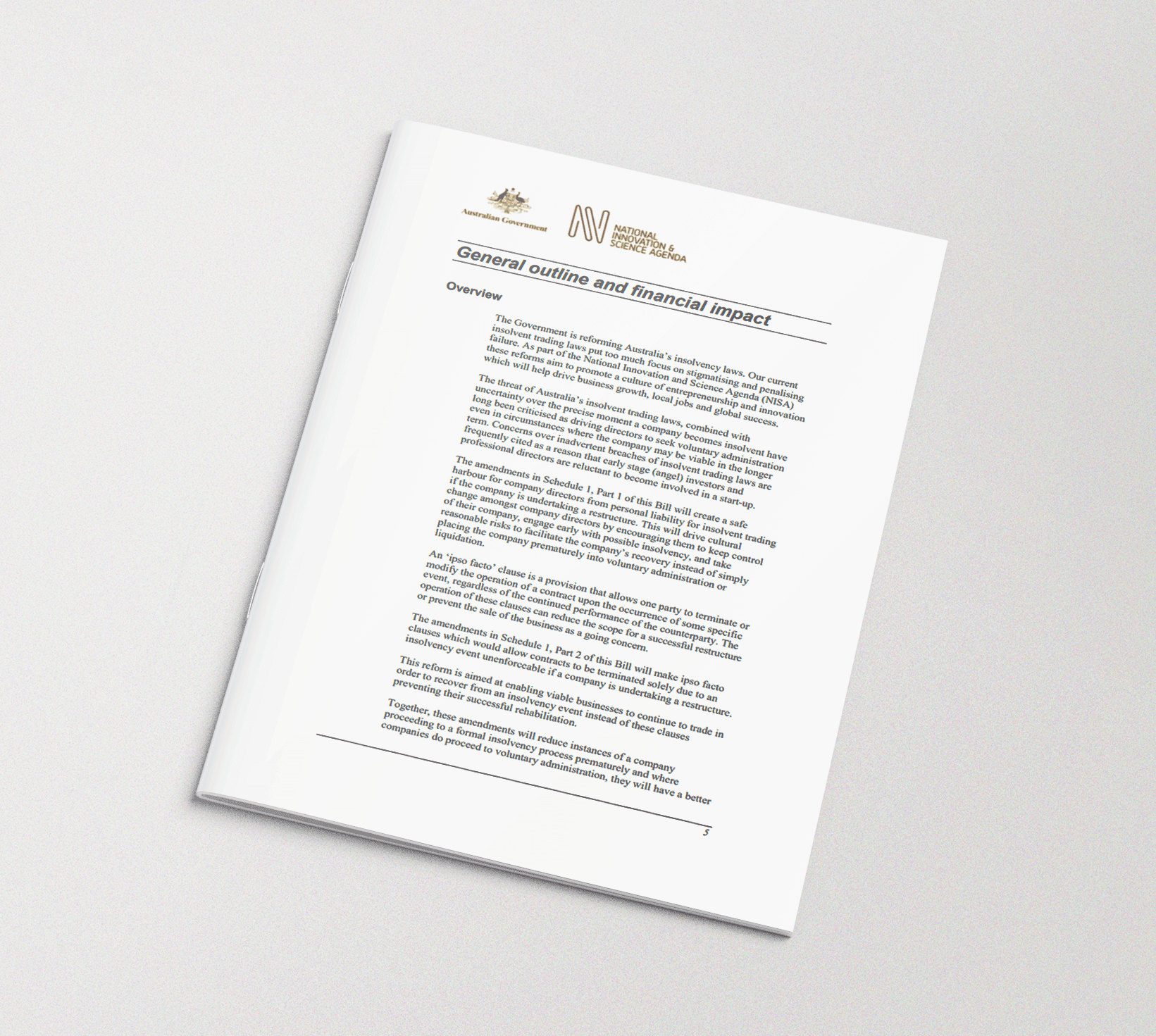
This Explanatory Memorandum outlines the policy intent, structure and operation of Australia’s Safe Harbour reforms. It seeks to clarify how Section 588GA operates, the “better outcome” test, eligibility conditions and the evidentiary expectations placed on directors.
Read now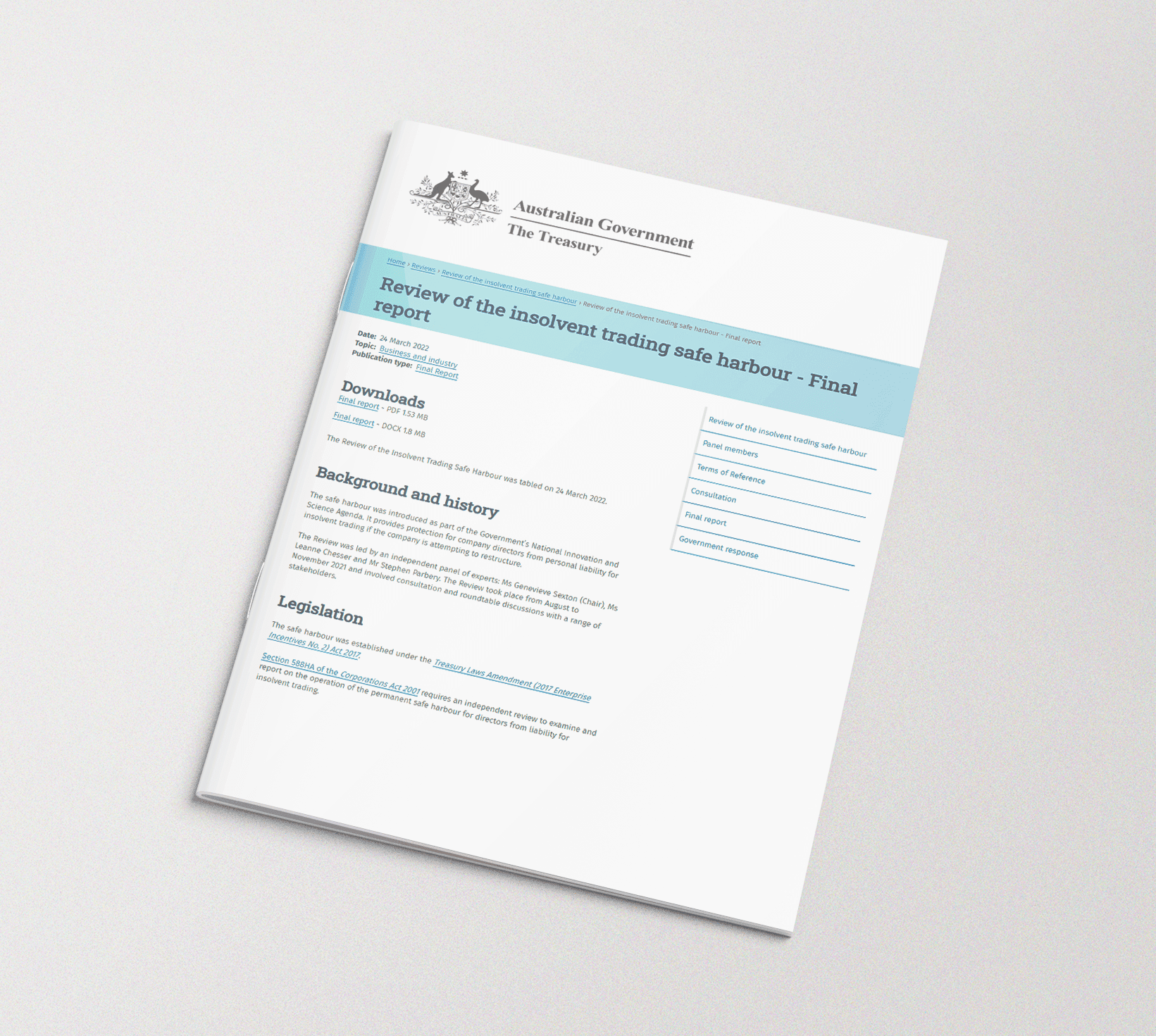
Treasury’s statutory review evaluates the effectiveness of the Safe Harbour regime, including uptake, behavioural change and practical challenges. It considers whether Safe Harbour has supported business rescue while maintaining appropriate protections for creditors and employees.
Read now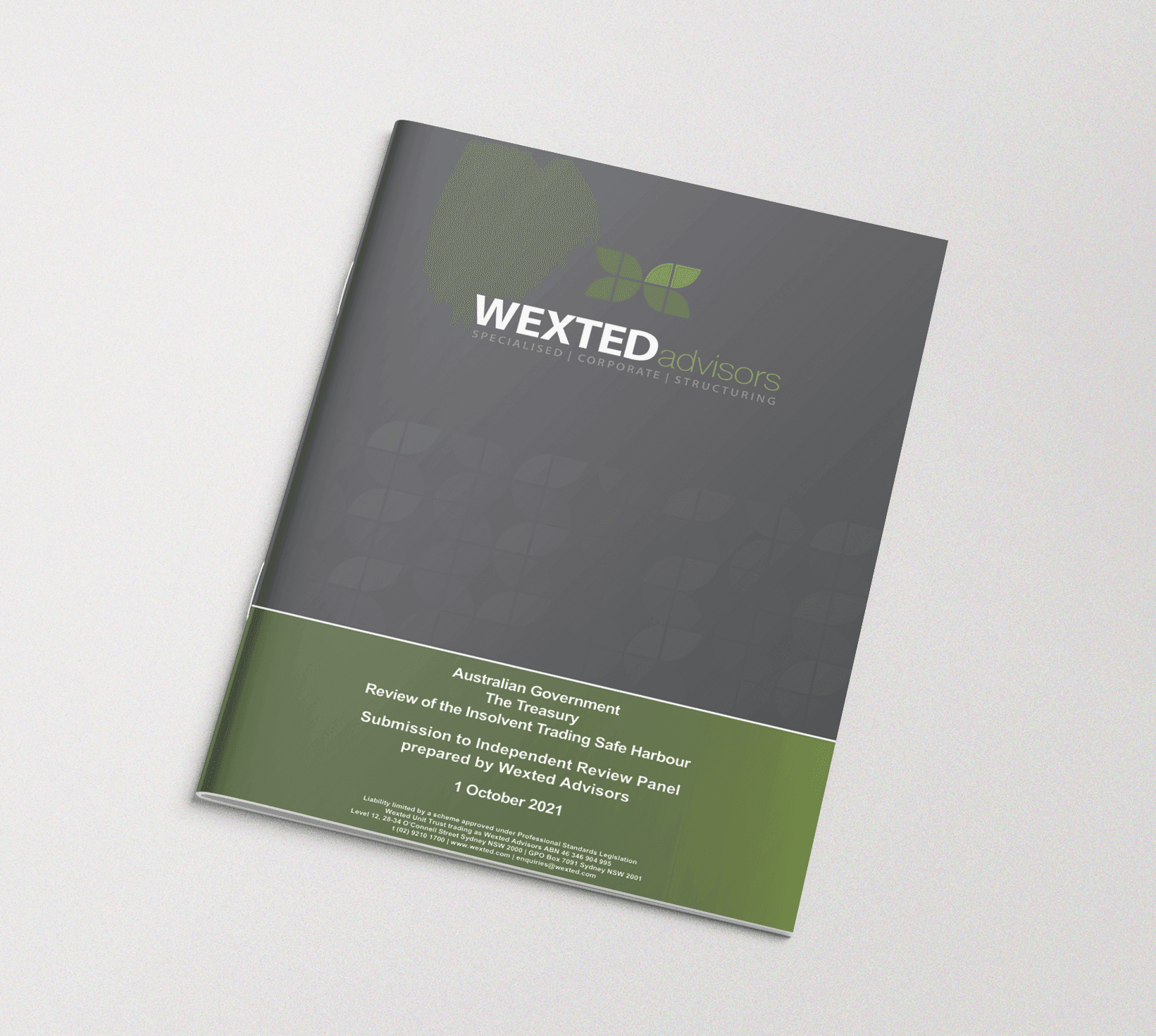
Wexted’s submission provides practitioner-led insights drawn from extensive Safe Harbour engagements. It highlights strengths and shortcomings of the regime, addresses evidentiary and guidance gaps, and offers practical recommendations to improve certainty and real-world effectiveness.
Read now
This episode explores Safe Harbour from a frontline practitioner perspective, discussing its intent, application challenges and evolving market understanding. It offers candid commentary on how directors and advisers can navigate Safe Harbour responsibly and effectively.
Read now
A reflective discussion with Genevieve Sexton, Chair of the Safe Harbour Review Panel, on whether Safe Harbour is delivering meaningful reform. The episode examines adoption levels, behavioural change and whether the regime is genuinely enabling earlier intervention and better restructuring outcomes for distressed businesses.
Read now
This Wexted insight traces the legislative and policy origins of Safe Harbour, from early reform debates through to enactment. It contextualises the regime’s purpose and explains why Safe Harbour represents a fundamental shift in Australia’s insolvency framework.
Read now
An analysis of the critical role AQEs play in Safe Harbour engagements. This article examines why independence, restructuring expertise and evidentiary rigour are essential — and how AQEs support directors in satisfying statutory and regulatory expectations.
Read now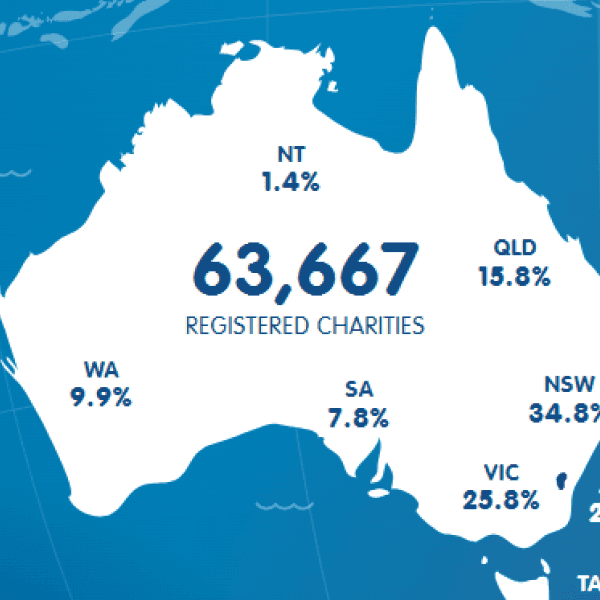
This piece explores how Safe Harbour applies to NFP entities, addressing common misconceptions. It outlines director duties, eligibility considerations and the practical challenges faced by boards operating in regulated, grant-funded or stakeholder-sensitive environments.
Read now
A practical examination of the moment directors suspect insolvency. This insight addresses the judgment call inherent in early intervention, highlighting how timely action, documentation and advice are critical to accessing Safe Harbour protection.
Read now
This article examines ASIC’s updated Regulatory Guide 217, focusing on clearer expectations around evidence, documentation and decision-making. It highlights how ASIC has narrowed ambiguity and raised the standard for directors relying on Safe Harbour.
Read now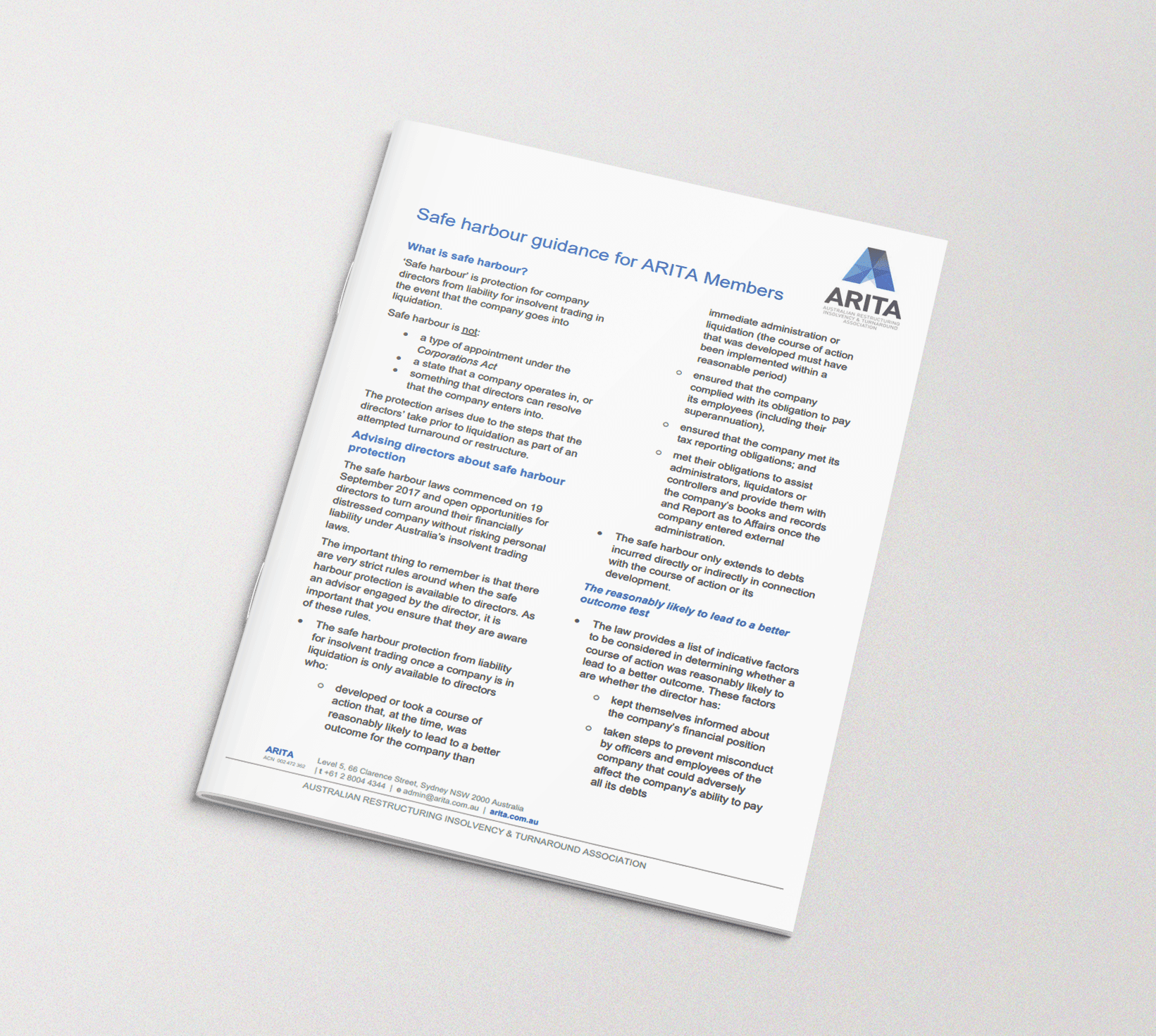
ARITA’s guidance provides professional standards and practical considerations for insolvency practitioners advising on Safe Harbour. It reinforces documentation discipline, independence and evidentiary thresholds, aligning practitioner conduct with ASIC’s regulatory expectations.
Read now
The Turnaround Management Association’s guidelines offer a restructuring-focused lens on Safe Harbour. They emphasise turnaround planning, stakeholder engagement and realistic execution — reinforcing Safe Harbour as a disciplined restructuring framework rather than a defensive shield.
Read now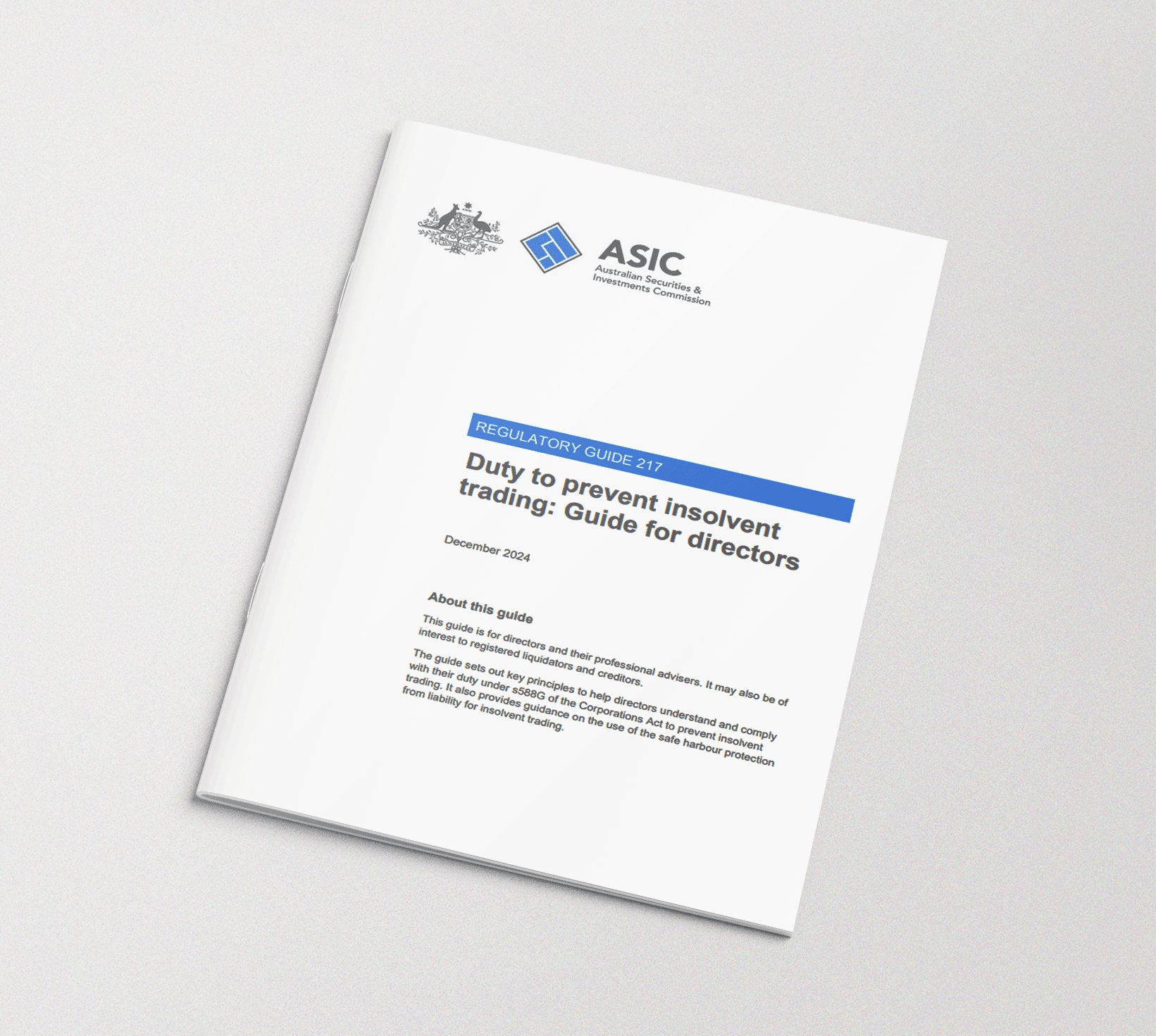
RG 217 is ASIC’s primary regulatory guidance on Safe Harbour. It explains how ASIC interprets Section 588GA, including eligibility, “reasonably likely” assessments, documentation expectations and how directors can evidence compliance if challenged.
Read now
A practical self-assessment tool designed to help directors understand Safe Harbour concepts and considerations. It provides high-level prompts around eligibility, decision-making and documentation, supporting early awareness rather than replacing formal advice.
Read now
An authoritative Wexted analysis of the 2021 Safe Harbour Review, assessing legislative refinements, market uptake and practical challenges. It highlights key recommendations, recent amendments and ongoing educational gaps important for directors considering or relying on Safe Harbour protection.
Read now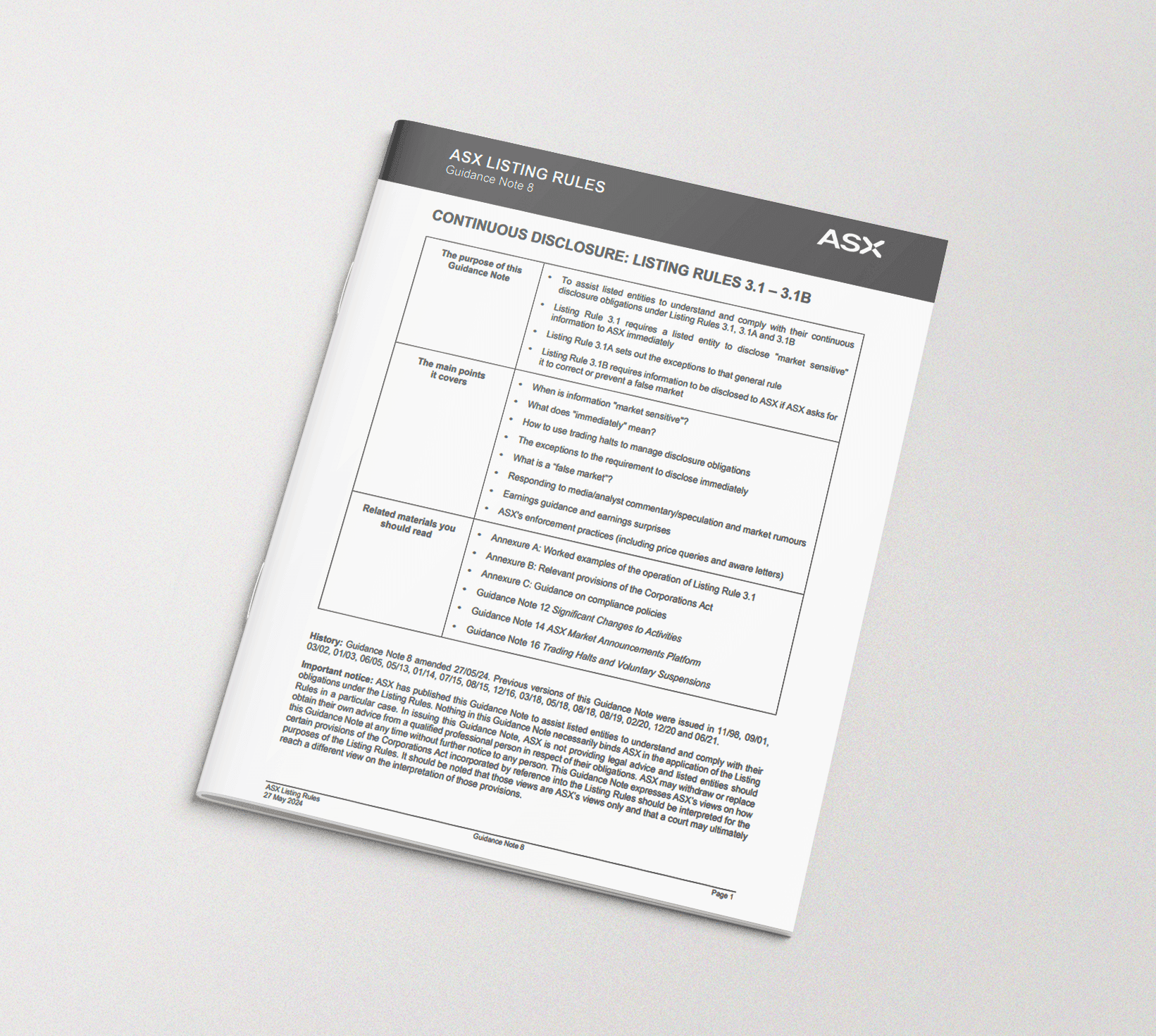
ASX Guidance Note 8 explains continuous disclosure obligations under Listing Rules 3.1–3.1B, detailing when price-sensitive information must be disclosed, exceptions, and how trading halts can be used. It is essential reading for listed entities navigating disclosure obligations alongside financial distress.
Read now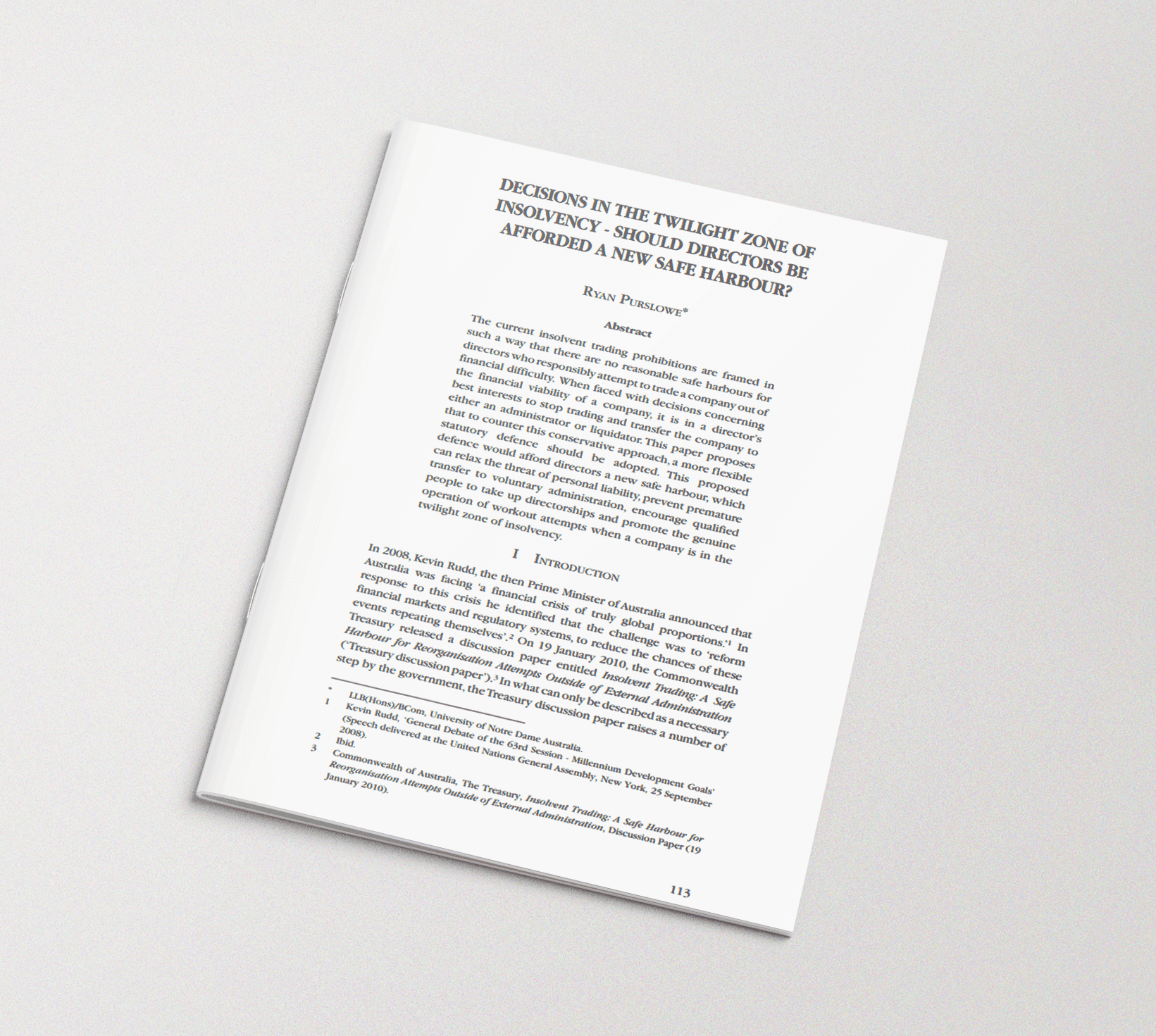
A legal commentary exploring directors’ duties in the “twilight zone” of insolvency, debating whether a statutory safe harbour defence should be provided and how personal liability for insolvent trading impacts director decision-making in financially vulnerable corporations.
Read now
This CAMAC Discussion Paper examines barriers and policy options for rehabilitating large, complex enterprises under Australia’s insolvency framework. It analyses voluntary administration, corporate structures and possible reforms, including comparisons with Chapter 11 style regimes.
Read now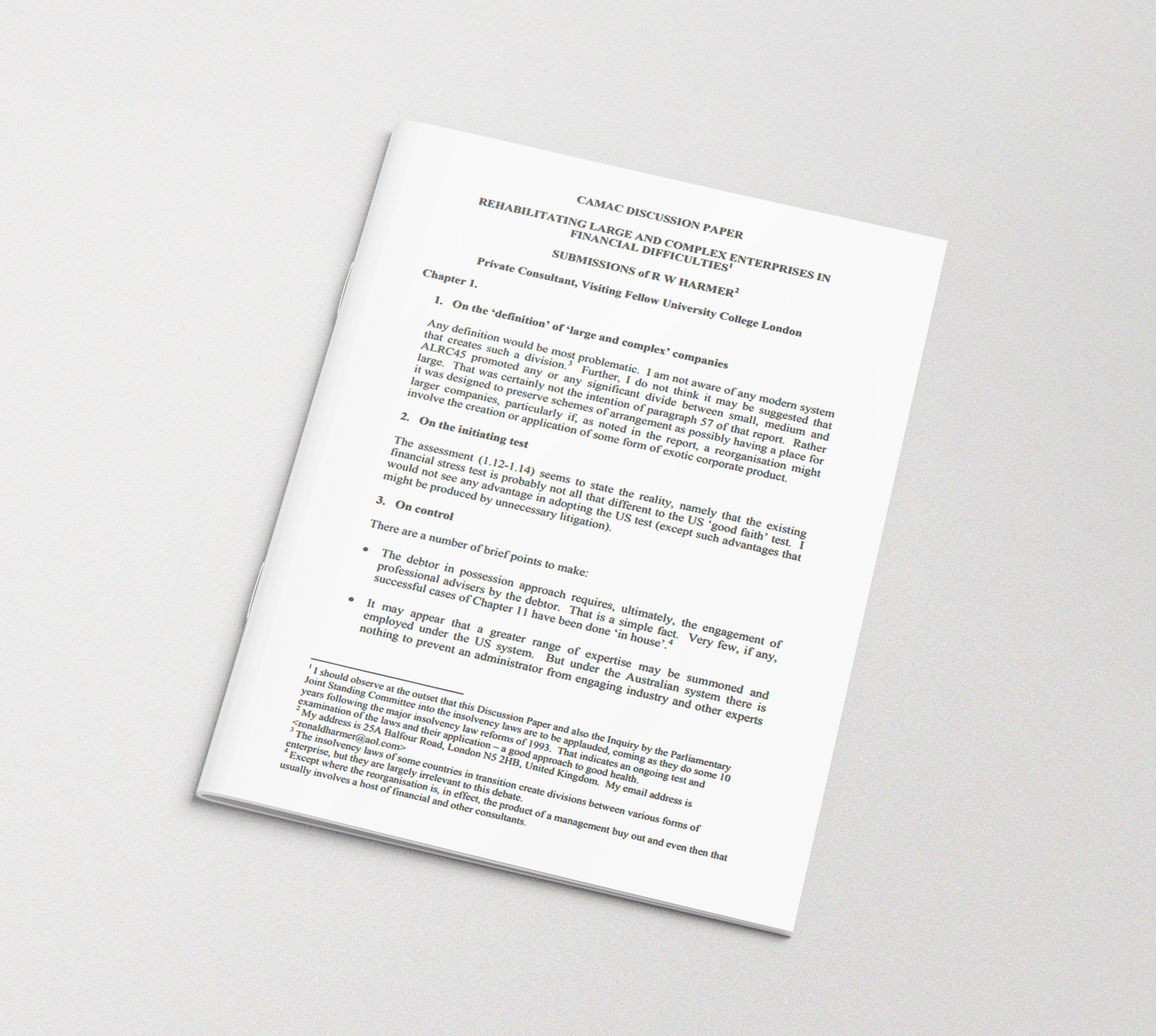
A collection of submissions responding to CAMAC’s complex enterprises discussion, including practitioner and industry views on insolvency reform, rehabilitation procedures and creditor rights. It provides insight into stakeholder perspectives on policy options affecting large distressed companies.
Read now
The PJC report reviews Australia’s corporate insolvency framework, assessing Safe Harbour effectiveness and recommending legislative and policy options. It examines balancing rescue incentives with creditor protections and sets a parliamentary agenda for reform, drawing on evidence from industry, practitioners and public submissions.
Read now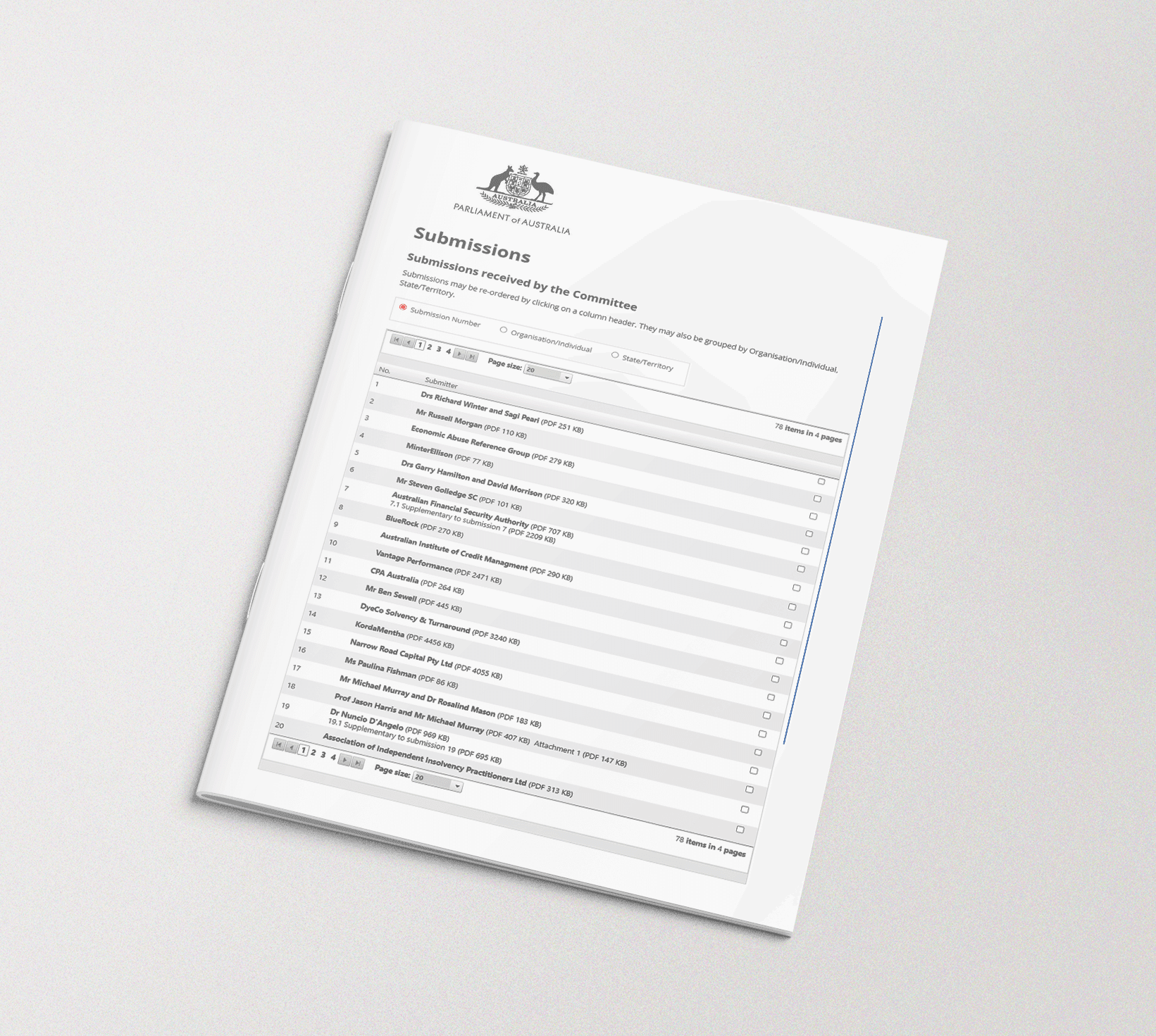
A curated collection of stakeholder submissions responding to the PJC’s corporate insolvency review. Submissions include industry bodies, law firms, insolvency practitioners and academics, offering diverse perspectives on Safe Harbour, insolvency reform priorities, practical impacts and recommended legislative refinements.
Read now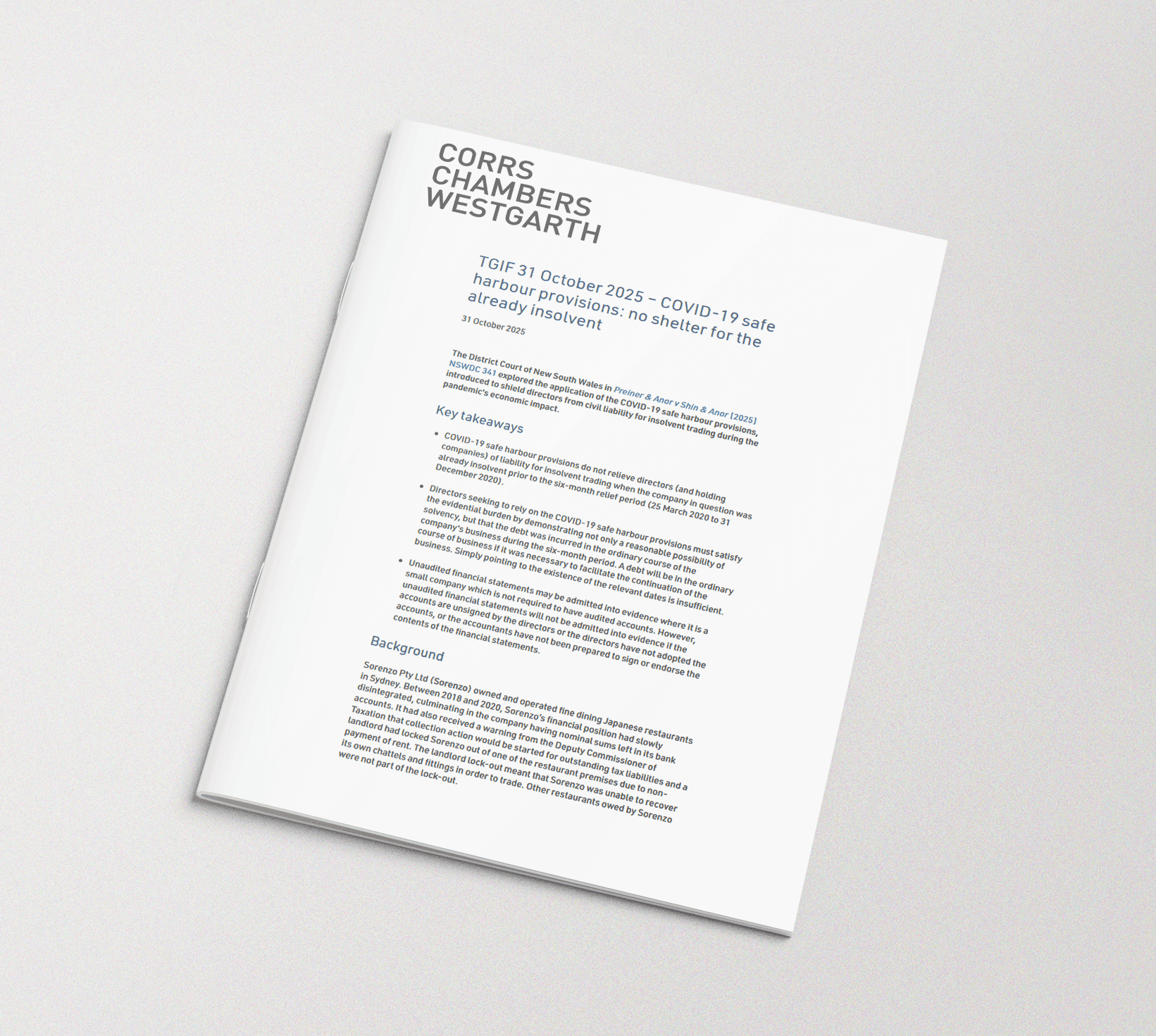
A legal analysis of COVID-era Safe Harbour amendments, arguing the temporary provisions offered limited protection for entities already insolvent prior to the pandemic. The article outlines the amendments’ scope, practical pitfalls and implications for directors who misunderstood the moratorium’s reach.
Read now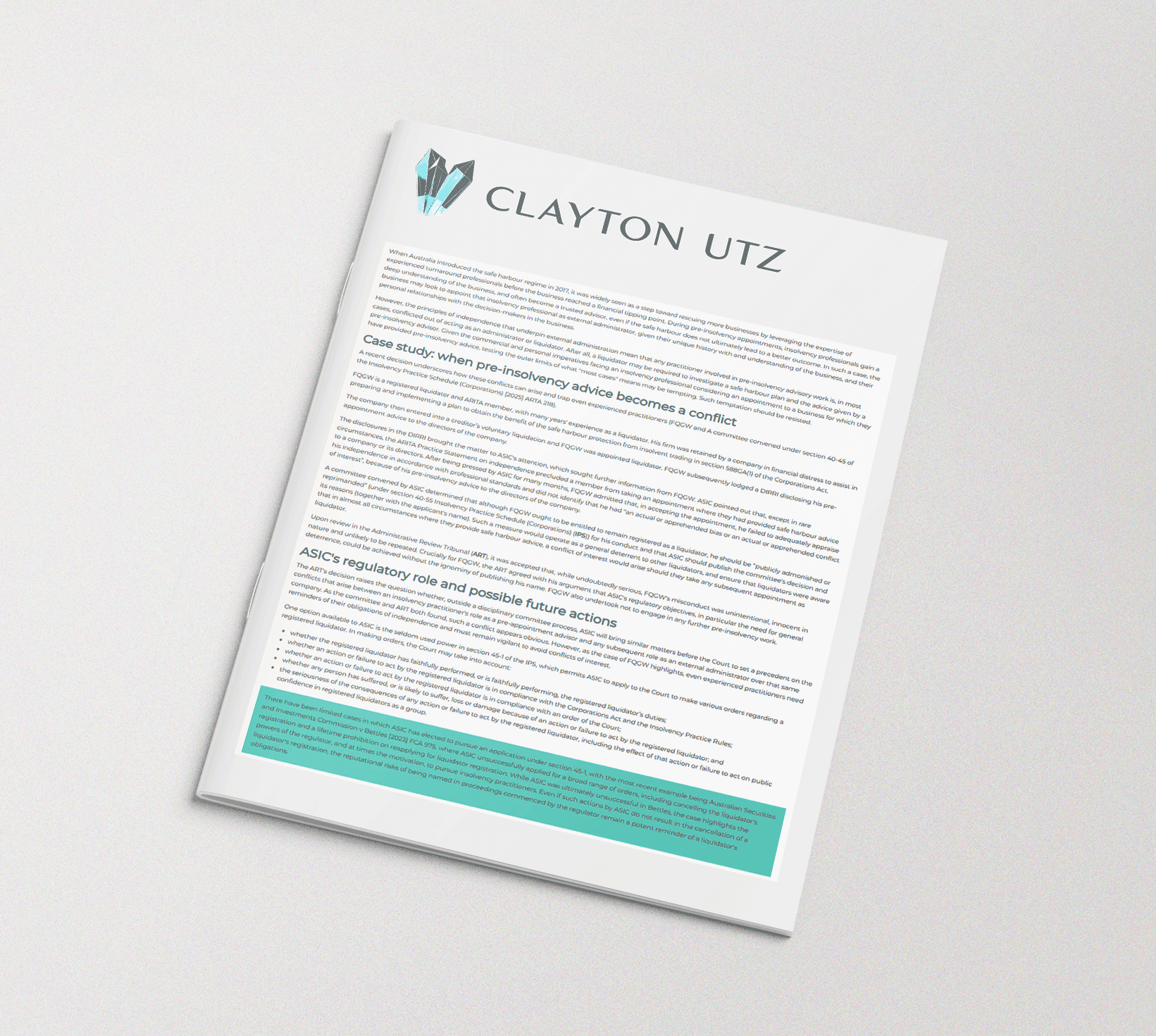
This article discusses the intersection between Safe Harbour engagements and liquidator independence, exploring potential conflicts where pre-appointment advisers later engage in insolvency processes. It clarifies ethical considerations, statutory duties and practical steps to preserve impartiality and evidentiary integrity.
Read now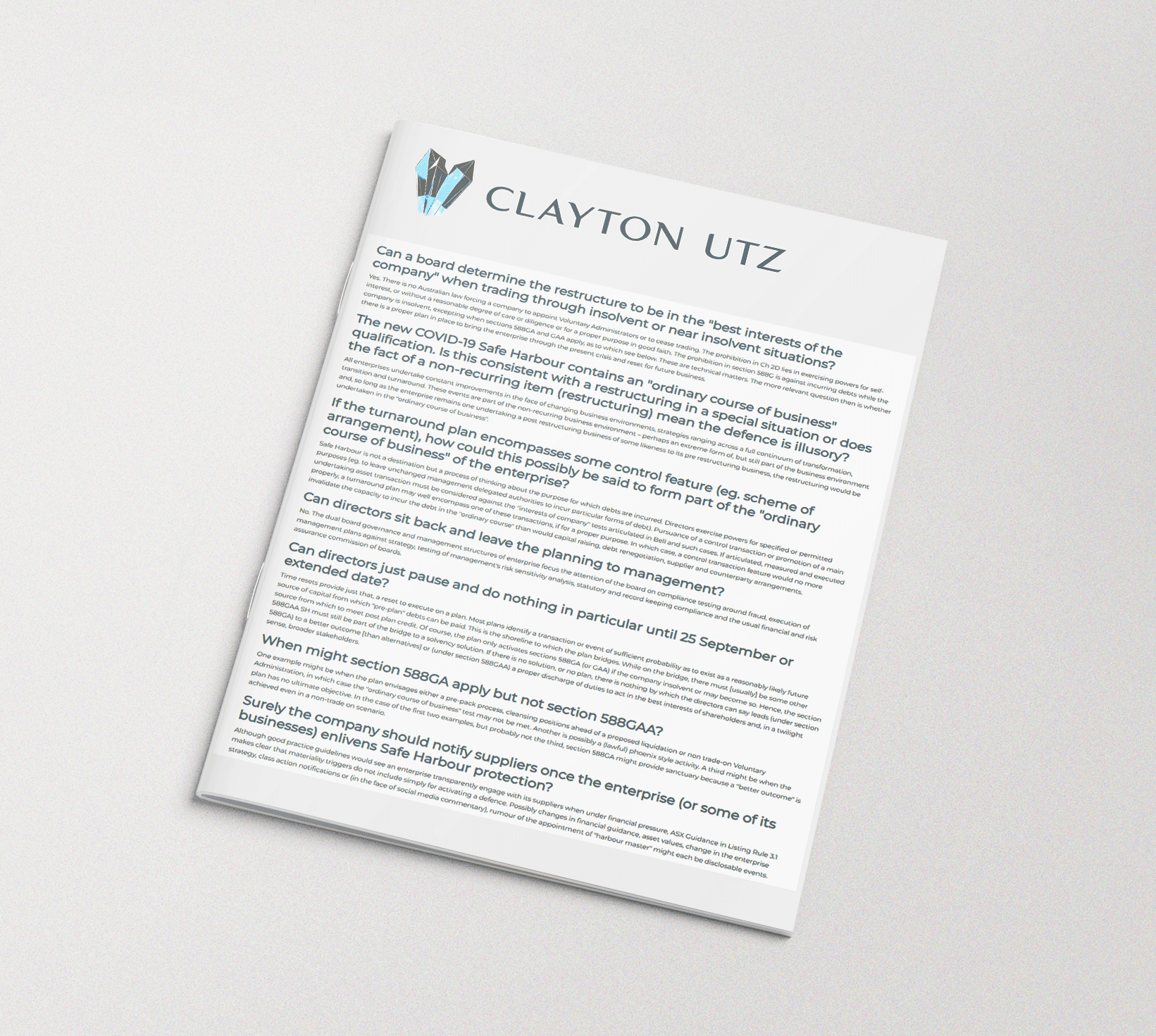
A practitioner-focused Q&A addressing the practical application of Safe Harbour: eligibility, director conduct, the better-outcome test, documentation expectations and risks. The piece distils common director questions and offers clear legal guidance for navigating the regime in early-stage restructures.
Read now
A podcast episode exploring how restructuring practice has evolved, including Safe Harbour’s role, market behaviours, creditor negotiations and the rise of multidisciplinary advisory. It offers practitioner insights into strategic and legal shifts shaping modern turnaround practice.
Read now
Section 588GA of the Corporations Act 2001 establishes a statutory Safe Harbour defence to insolvent-trading claims under s588G. It protects directors for debts incurred while developing or implementing a course of action “reasonably likely” to lead to a better outcome, subject to eligibility and documentary requirements (see s588GA(2) & (4)).
Read now
The 2004 CAMAC Report provides considered conclusions and recommendations following its earlier 2003 discussion paper. It reflects detailed analysis of stakeholder submissions and further research, narrowing policy options into preferred positions and offering structured advice to government on reforming Australia’s framework for corporate rehabilitation and restructuring.
Read now
This ASIC report consolidates feedback from its earlier discussion paper and sets out a forward-looking regulatory roadmap for Australia’s capital markets. It addresses the shifting dynamics between public and private markets, identifies emerging risks, and outlines supervisory priorities focused on transparency, governance, data and market integrity.
Read now
ASIC’s discussion paper examines structural changes in Australia’s capital markets, including declining public listings and the rapid growth of private capital. It explores opportunities and risks across both markets, posing key policy questions to inform future regulatory settings and strengthen market efficiency, confidence and participation.
Read now
This Act introduced Australia’s Safe Harbour regime, amending the Corporations Act 2001 to provide directors with protection from insolvent trading liability where they pursue a restructuring course “reasonably likely” to achieve a better outcome. It marked a shift toward encouraging early, proactive turnaround efforts while preserving creditor safeguards.
Read nowDownload the Safe Harbour Guide from Wexted. It delivers a comprehensive overview of Safe Harbour; including what it is, when it applies, and how it can protect directors during periods of financial uncertainty.
DOWNLOADContact Wexted if you have an appropriate document or article that you would like to be part of the Safe Harbour Resource Centre.
GET IN TOUCH