
NEWS & INSIGHTS
TECHNICAL TOP TIPS | MEETINGS: CHAPTER 2 - MOTIONS AND VOTING PROCEDURES
In Chapter Two of our technical top tip series we examine specific issues related to the general management of insolvency and restructuring assignments!
It was once said that “Meetings are indispensable if you don’t want to do anything”. In the second in a Wexted Technical Series, we consider the Moving of Motions, and Voting Procedures, and the critical issues in getting the detail right.
The Wexted Technical Top Tip Series
The Wexted Technical Top Tip Series will be examining specific issues related to the management of insolvency and restructuring assignments, and our first mini-series will be on Meetings.
The running of a formal meeting is, of course, a critical element of a successful insolvency. In a contested environment such as insolvency and restructuring, it is of course necessary, for public confidence, that decisions are made based on proper principles.
Whilst there are many rules and Procedures relating to Meetings (such as Division 75 of the Insolvency Practice Schedule CORPORATIONS ACT 2001 - SCHEDULE 2 Insolvency Practice Schedule (Corporations) those regulations relate to tangible matters associated with creditors and committee meetings, the giving of notices, the admission of claims to vote, and so on. They do note provide any practical support in relation to the various non-insolvency procedural issues and conventions, nor the more intangible issues that participants should understand and keep in mind, which are becoming more important as restructuring processes evolve.
Technical Top Tips | Meetings: Chapter 1 - The Chair
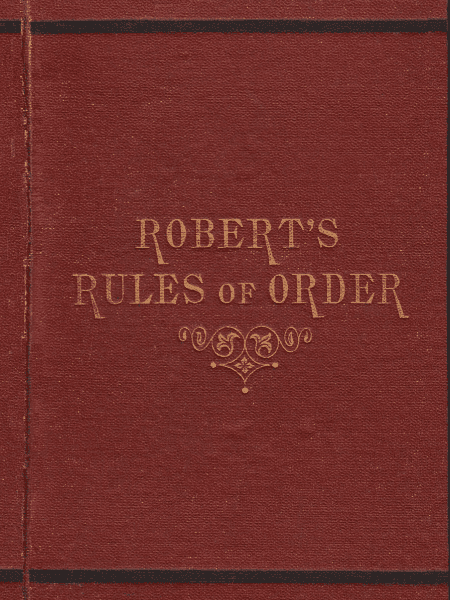
In Chapter 1 of the series, we covered the role of the Chairman: Meetings and assemblies have traditionally had a presiding officer or rotating leadership to control debate, traditionally (of course) this was a king, or bishop in an Ecclesiastical setting. In more modern times, and according to Roberts Rules, the Chairman was established as the neutral presiding officer responsible for:
- Open the session at the appointed time and call the members to order.
- Announce the business to be acted upon in the order in which it is to be considered.
- Recognize members entitled to the floor.
- State and put to vote all questions that are regularly moved or arise in the course of proceedings.
- Protect the assembly from frivolous motions by refusing to recognize them.
- Assist in expediting business in a way compatible with the rights of the members.
- Enforce the observance of order and decorum among the members.
- Make decisions on points of order.
- Authenticate all acts, orders, and proceedings of the assembly.
- Declare the assembly adjourned if necessary.
Acknowledgement
In writing these articles I have had regard to Joske’s Law and Proceedings at Meetings in Australia. Originally published in 1938 by the Honourable Sir Percy Joske CMG, a judge of the Commonwealth Industrial Court and the Supreme Court of the Australian Capital Territory and the Northern Territory, this work stands as a cornerstone in meeting procedure jurisprudence. Sir Percy’s exhaustive exploration of the subject spanned his lifetime. The text, now in its 12th edition, continues to be updated and published.
Meeting conduct generally
In insolvency and restructuring matters, anticipated business is rarely brought before a meeting, and the resolutions are generally well known in nature, and are put by the Chairman of the Meeting. However, it is important that convenors of meetings appreciate and understand the broader context of active meeting procedure, than a simple insolvency meeting where resolutions are defined and controlled and where the Chairman controls the information, and there is usually no equity participation.
The Turnaround Podcast: Genevieve Sexton — Safe Harbour and are we making a difference?
This issue has become more apparent and important to IP’s following the successful integration of the Safe Harbour Law into the Restructuring framework. This has required IP’s to be far more engaged with the governance activities of (in particular) of public companies, and work more closely with Chairman in relation to addressing the needs of shareholders.
We addressed this issue in a recent Podcast (particularly at 25:30 to 27:30) where Wexted spoke to Genevieve Sexton at ABL about the maturing of the restructuring sector beyond recovery work and into a broader appreciation of the governance environment.
Motions and Amendments
What are the important elements of a clear Motion:
| Elements to consider | Detail |
| Clarity |
|
| Order and protocol |
|
| Notice |
|
| Relevance and Scope of Amendments |
|
| Bringing a motion to a vote |
|
| Role of the Chair |
|
| Recording in Minutes |
|
The Chair of the meeting plays a particularly important role in managing the debate on contentious motions, keeping the discussion relevant, and remaining neutral and procedural.
Voting
The most common manner in which to determine a vote is a ‘show of hands’. However, a vote by a show of hands means each person has one vote, and proxies are not counted. The advent of virtual meetings, and the difficulty in determining votes on this basis has led to alternative methods of voting coming more important.The very specific terms of the insolvency rules draw a quite sharp distinction with the common law:
Division 75 of the Insolvency Practice Schedule CORPORATIONS ACT 2001 - SCHEDULE 2 Insolvency Practice Schedule (Corporations) and in particular 75-50:
75 - 50 Rules relating to meetings:
(1) The Insolvency Practice Rules may provide for and in relation to meetings concerning companies under external administration.
(2) Without limiting subsection (1), the Insolvency Practice Rules may provide for and in relation to:
(a) the circumstances in which meetings must or may be convened; and
(b) notice for convening meetings; and
(c) agenda; and
(d) information to be given in connection with meetings; and
(e) who is to preside at meetings; and
(f) the number of creditors or contributories required to constitute a quorum; and
(g) proxies and attorneys; and
(h) motions; and
(i) voting (including casting votes); and
(j) the circumstances in which a resolution must or may be put to creditors or contributories in a meeting; and
(k) the circumstances in which a resolution or a special resolution put to creditors or contributories in a meeting is passed; and
(l) facilities, including electronic communication facilities, to be available at meetings; and
(m) minutes; and
(n) costs in relation to meetings and security for those costs.
The very specific terms of the insolvency rules draw a quite sharp distinction with the common law:
| Note | Detail |
| Poll Voting |
|
| Present at meeting |
|
| Description of outcome |
|
| Casting vote |
|
Conclusion
We will continue the Top Tips Meeting Series, with our next Chapter on Notices and Resolutions!
Published 8th April 2026

By Joseph Hayes
Partner